
END OF SEASON NEWSLETTER | AUTUMN 2026
Thank you to everyone who sent through photos and stories from this year. We genuinely love seeing them, and seeing how a new sail or cover has fitted into your season.
If you haven’t sent us anything yet, we’d still love to hear how it went. Just reply to this email with a photo or two.
EVERYONE’S SEASON ENDS AT A DIFFERENT TIME
Some of you must be off your mooring by the end of October. Some have haul-out plans and dates with the boatyards. Some of you are in a marina berth that runs through to Easter. Some of you are still racing until the end of the year.
So rather than pick an arbitrary date and tell you, “winter starts now”, we don’t.
We’re simply here, ready whenever your season finishes, whether that’s next week or next spring. There’s no form to fill in and no particular date you need to hit.
Bring it to us, send a photo, or give us a call. Whenever you’re ready is the right time.
SOMETHING WE’VE BEEN BUILDING
Quietly, in the background, we’ve been putting together a new website, aimed at being a properly useful resource for sail and cover care, not just a shop window.
It’s very much a work in progress, and we’ll be adding to it as we go, but the winter maintenance guide is ready now.
Read the Winter Maintenance Guide
WHY WASHING ACTUALLY MATTERS
Salt does three things to sails and covers, and none of them stop happening just because the boat is ashore.
It clogs the cloth. Marine fabrics rely on microscopic gaps to breathe and control water resistance. Salt blocks those pathways, traps moisture, and creates the conditions for mould, which doesn’t just stain, it releases enzymes that break the material down. That’s why those dark marks are usually permanent even once the mould itself is gone.
It stiffens the cloth. Fabric that can’t flex can’t respond correctly to wind loads, so the shape you paid for stops being the shape you have. You don’t lose performance because a sail got old. You lose it because the sail is dirty.
It abrades the cloth. Salt crystals are hard and sharp, and every time the sail moves they rub against individual fibres. Yarns weaken, coatings break down, and in a laminate the crystals scratch the Mylar film, letting moisture into the damage and accelerating delamination. Soot, bird muck and sand all do a version of the same job.
WHAT WE CAN DO, IN ORDER OF COST
A wash
Often the cheapest thing on the list, and the one with the best return.
It removes the salt from inside the weave rather than just the marks off the surface, which are two different jobs.
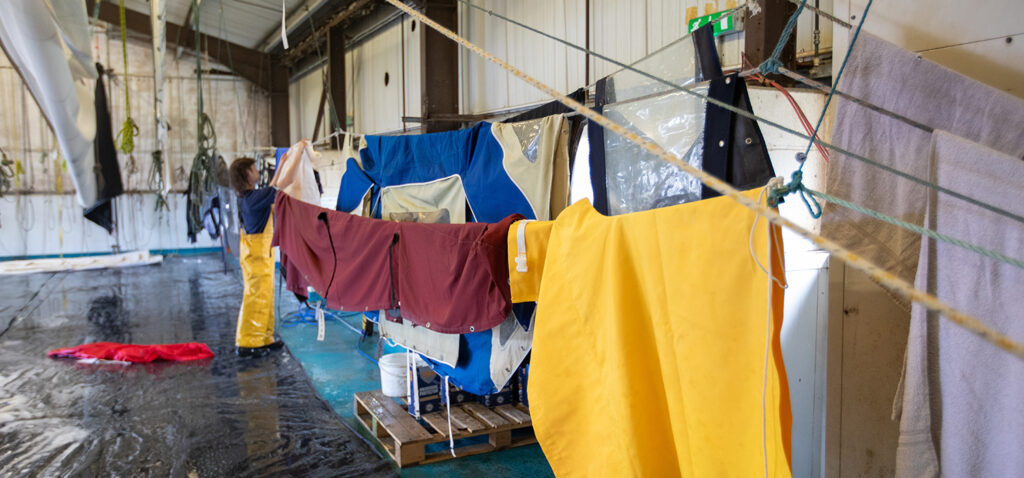
Our laundry goes through one of the country’s leading marine valeting specialists. Every item is weighed, labelled and assessed individually when it arrives, cleaned with fabric-specific detergents and never with bleach, then laid out flat and checked over before it goes up to dry in a heated drying room.
A wash will not fix everything, and we’d rather say so now. Mould that has already got into the fibres leaves a permanent mark even once the mould is gone, and nothing puts back cloth that has gone soft with UV. If that’s what you’re looking at, we’ll tell you.
A reproof
PU cover fabric is proofed when it is made, and that proofing weathers and washes out over the years.
A wash takes the salt and dirt out, but it does not put the water repellency back, so a clean cover with no coating left in it will still let water through.
If your sprayhood or tonneau has started soaking in rather than beading, this is the time to have it reproofed. It has to be done on clean fabric to hold properly, so it goes hand in hand with the wash rather than instead of it.
A full service and winterisation
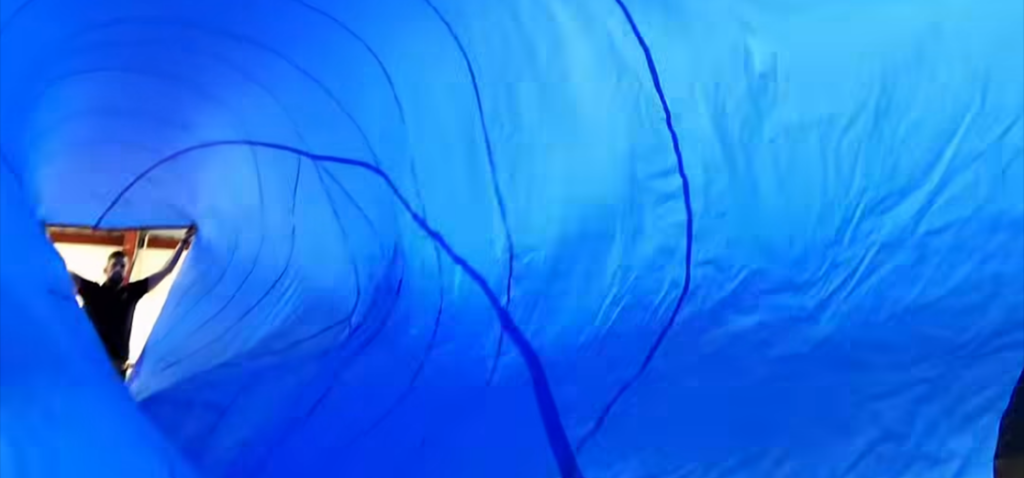
The sail goes flat on the loft floor and gets inspected on hands and knees by an experienced sailmaker who knows exactly what to look for.
Every row of stitching, including the edging tapes. Every seam. Chafe on the luff rope under every slide and every hank. Batten pockets, and whether the fixing will actually hold a batten. Every point that contacts rigging, stanchions or guardrails. Webbing loops and straps and their stitching. Delamination on laminates.
On covers, every zip, every fastening, every fitting, and every window is checked for splits.
We’ll give you a full report of what we found, what we recommend, and what can be left alone for another season.
That last part is as useful as the other two.
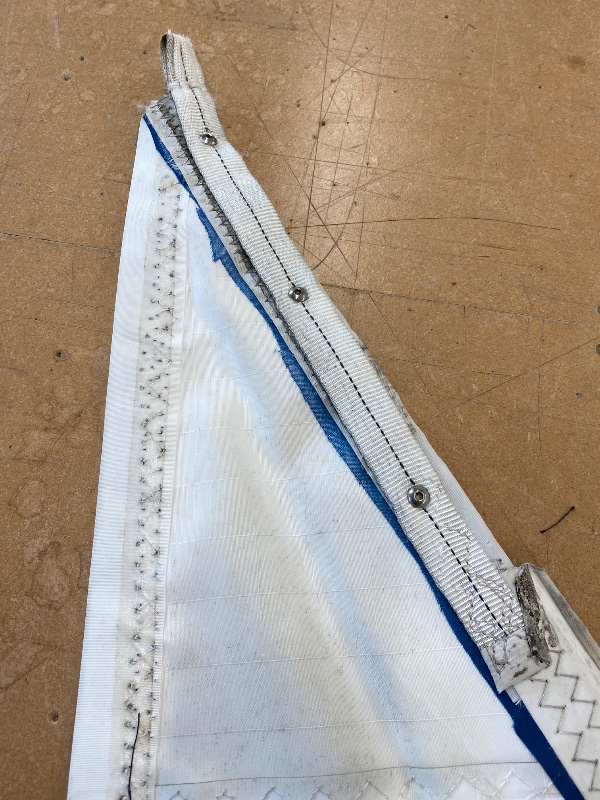
Repairs and upgrades
Whatever the service turns up, we can take care of it: restitching, chafe patches, batten pockets, luff tapes, leech lines, hardware, cover zips and windows.
If your headsail lives furled on the forestay without protection, this is the moment to sort a UV strip. A roller-reefing headsail left uncovered will rot, and UK sun is quite capable of doing it.
If you want a cover to last, ask about upgrading the stitching to Tenara, which is unaffected by UV, salt water, acid rain and cleaning agents, and carries a fifteen-year guarantee.
THEN WE KEEP IT FOR YOU
Sails and covers should be stored clean, dry and properly folded, somewhere warm.
Most garages are not that. Most garages are cold, damp and already full.
We have a dedicated south-facing, heated, dry storage area, free after any service, winterising or wash work, provided the invoice is settled within fourteen days.
There’s no time limit on it. Leave it with us until you want it back.
Items are held at owner’s risk under our terms of business, so please keep your contact details with us up to date.
COLLECTION AND DELIVERY
We can help with collection and delivery for Salcombe, Saltash, Plymouth, Hayling Island, Teignmouth and the surrounding areas.
We can’t run the van out every evening, but we’re willing to try and help. If a few of you in the same area can get together and round up a few jobs for one collection, let us know and we’ll see what we can arrange.
IF YOU’RE UNSURE WHETHER SOMETHING NEEDS LOOKING AT
Send us a photo.
Reply to this email with a picture of whatever you’re unsure about, or drop it in at the loft and we’ll take a quick look.
Either way, the initial check, advice on what to do next and the report are free.
What you get back is a straight account of what it needs and what it doesn’t. If it’ll do another season, we’ll tell you that.
We’d rather have you as a customer for fifteen years than sell you something you didn’t need this winter.
Drop in at Unit 1, Castor Farm Estate, Metherell Avenue, Brixham, or get in touch and we’ll arrange a collection.
No booking needed, no form to fill in, just get in touch when you’re ready.
The team are here for you, and we’re looking forward to it.
Fair winds,
Dom, Sean, Helen, Jamie, Mark and Laura
Dart Sails & Covers
If you want more of this kind of thing between newsletters, you can find out what we’ve been up to on Facebook, Instagram and LinkedIn.